
7 Effective Ways to Remember Chinese Characters
Learning Chinese can be rewarding, but many students find it difficult to remember Chinese characters. Unlike English, Chinese uses a character-based writing system where each symbol represents a meaning rather than individual letters. Because of this, students often feel overwhelmed when they try to memorise large numbers of characters for school.
The good news is that memorising Chinese characters becomes much easier with the right techniques. Instead of relying purely on repetition, students can use strategies that improve memory, understanding, and recognition. Many experienced educators in Singapore recommend structured learning methods that help students recognise patterns and build stronger language foundations.
Here are seven practical ways students can memorise Chinese characters faster and more effectively.
1. Understand Radicals and Character Components
Chinese characters are made up of smaller parts known as radicals and components. These elements often give clues about the meaning or pronunciation of a character. When students understand these building blocks, they can identify patterns and remember characters more easily.
For example:
- 氵 (water radical) appears in characters related to water, such as 河 (river) and 海 (sea).
- 木 (wood radical) is found in characters connected to trees or wood.
Instead of memorising each character separately, students can learn how radicals combine to form new characters. This approach makes learning more logical and less overwhelming.
Tip: Create a list of common radicals and review them regularly while studying new characters.
2. Practise the Correct Stroke Order
Stroke order plays an important role in writing Chinese characters. Following the correct sequence helps students develop muscle memory, which improves both writing speed and recall.
When students practise characters using the proper stroke order:
- Characters become easier to remember
- Writing becomes more consistent
- Students develop better handwriting structure
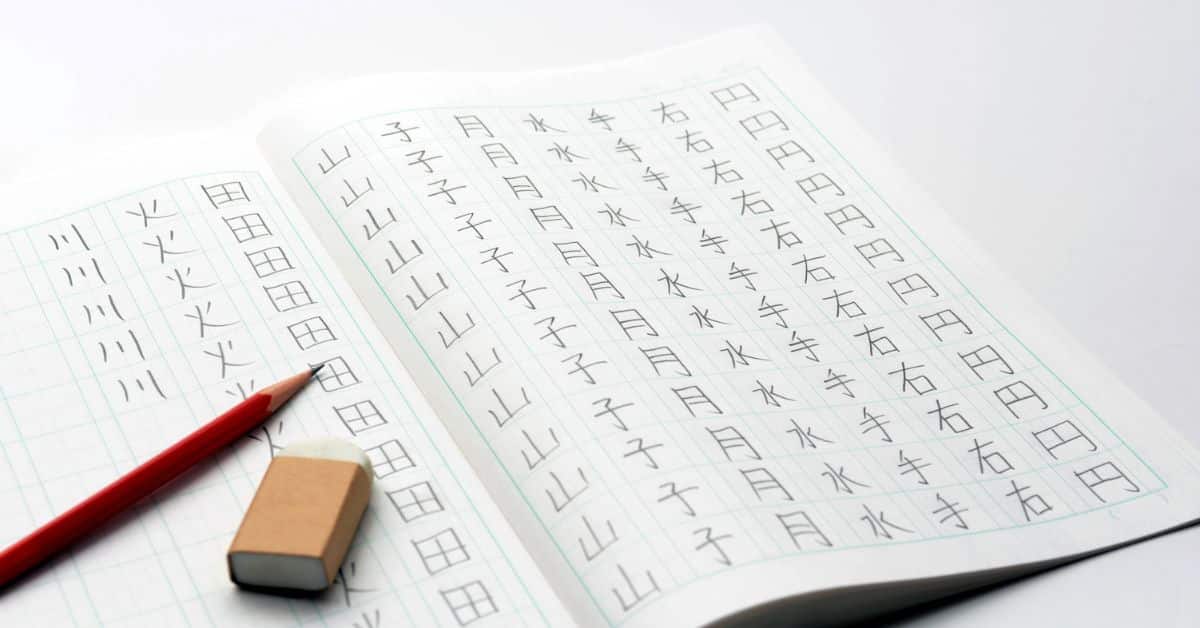
Teachers often recommend practising characters on grid paper to help students understand spacing and alignment.
Tip: Write each character several times while focusing on the correct stroke order rather than rushing through practice.
3. Create Visual Associations
Chinese characters can be easier to remember when students create visual connections or stories. Associating a character with an image helps the brain store the information more effectively.
For instance:
The character 休 (rest) consists of the components person (亻) and tree (木). Students can imagine a person resting under a tree to remember its meaning.
This storytelling method transforms abstract symbols into memorable ideas.
Tip: Encourage students to draw simple pictures or write short stories related to the characters they learn.
4. Learn Characters Through Words and Sentences
Memorising characters individually can be challenging. Instead, students should practise learning characters within words, phrases, or sentences.
For example:
Instead of learning 学 (learn) alone, students can study:
- 学校 (school)
- 学习 (to study)
Seeing characters used in context helps students understand how they function in real communication. This method also reinforces memory through repeated exposure.
Tip: Encourage students to read short Chinese passages or simple storybooks suitable for their learning level.
5. Use Flashcards for Regular Revision
Flashcards are one of the most effective tools for memorising Chinese characters. They allow students to review characters regularly and test their memory quickly.
A simple flashcard can include:
- The Chinese character on one side
- The meaning and pronunciation on the other
Frequent revision strengthens long-term memory and prevents students from forgetting characters they have already learned.
Tip: Review flashcards for a few minutes every day rather than trying to memorise many characters in one session.
6. Practise Writing Frequently
Writing remains one of the most reliable ways to remember Chinese characters. Repeated writing helps students develop familiarity with the character’s structure and improves recall during exams.
However, effective practice is not just about copying characters many times. Students should focus on:
- Correct stroke order
- Proper spacing and balance
- Understanding the character’s meaning
Short, consistent writing practice sessions are usually more effective than long and tiring study sessions.
Tip: Set a daily goal to practise a small number of characters to maintain steady progress.
7. Increase Exposure to the Chinese Language
Another effective way to reinforce learning is through regular exposure to Chinese in everyday life. When students see or hear characters frequently, they begin recognising them naturally.
Students can increase exposure by:
- Watching Chinese educational videos
- Reading simple Chinese books
- Listening to Chinese audio programmes
- Using learning apps designed for language practice
This approach helps students associate written characters with pronunciation and meaning, strengthening overall language skills. Regular exposure, combined with structured learning such as primary Chinese tuition for better exam results, can further support students in improving their language proficiency.
Tip: Encourage students to identify familiar characters when reading signs, books, or subtitles.
Final Thoughts
Students who need extra support can benefit from primary chinese tuition for better exam results offered by Mavis Tutorial Centre. Structured lessons, experienced teachers, and consistent practice help students strengthen their Chinese foundation and build confidence in the language.
Memorising Chinese characters becomes easier when students use structured learning methods and practise consistently. Techniques such as learning radicals, using visual associations, and practising writing regularly can greatly improve memory and understanding. With the right guidance and regular practice, students can gradually improve their Chinese skills and perform more confidently in school assessments.
Frequently Asked Questions
Chinese characters can be challenging because they are not based on an alphabet. Each character represents meaning and structure, so students need time and practice to recognise patterns and remember them accurately.